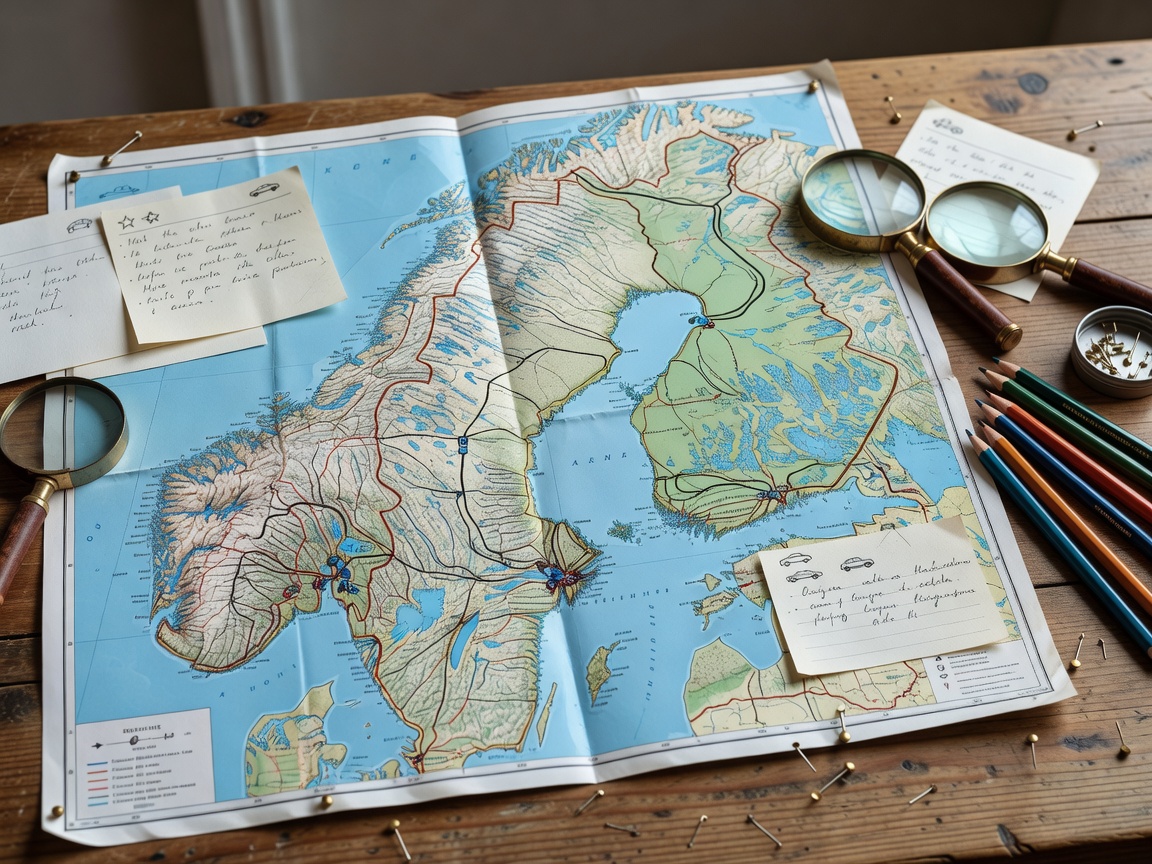
PLANNING NOTE / 05
Start with the trip purpose.
Decide whether the priority is landscape, rally heritage, an organized event or a multi-region drive. Those goals affect the season, accommodation, route density and amount of time needed. Do not plan a public-road itinerary around access to a competition stage. A rally stage may be private, closed or used only under event control.
Choose a route with legal access
Use current mapping as a planning aid, then verify the route’s status with relevant local sources and signs. Map visibility does not prove public access. Check restrictions for vehicle type, season and local land use. Do not treat a private road as a shortcut. If access is unclear, choose another road or contact the responsible local authority or land manager before travel.
Build a primary route and at least one practical alternative. Alternatives should also be legal and appropriate for the vehicle, weather and daylight. Avoid a chain of narrow rural roads with no service margin if a closure would leave no reasonable option.
Season, daylight and weather
Season determines more than scenery. Winter can bring snow, ice, reduced daylight and changing road access. Summer offers longer daylight in many northern areas, but that does not remove the need to check local conditions. Mountain and coastal areas can have weather patterns unlike nearby lowland routes. Check current forecasts and official road notices before departure and while traveling.
Keep each day’s driving plan flexible. Avoid scheduling arrival at the limit of available daylight. Add time for rest, food, route changes and slower travel on unfamiliar surfaces. If an official notice or actual condition makes a road unsuitable, change the plan.
Accommodation, food and fuel
Identify overnight options near the planned route and confirm booking details directly with providers. Availability, prices and opening hours change; this guide does not verify them. In remote areas, check service locations and operating times before departure. Plan fuel stops before leaving a larger settlement, especially when the itinerary includes long rural sections. Do not assume every village has an open fuel station or food service.
Carry appropriate snacks and drinking water for the journey. Include rest breaks and a realistic arrival time. If the trip involves an event, use its official transport and parking instructions. Event traffic arrangements may differ from ordinary access.
Vehicle and equipment review
Check the vehicle against the route and season. Follow manufacturer maintenance guidance for tires, brakes, lights, fluids, battery, wipers and any warning indicators. Confirm that required seasonal equipment meets local law. A standard vehicle check cannot certify suitability for a road; select routes within the vehicle’s limits and seek qualified service advice where needed.
Carry the documents and emergency equipment required for the countries visited. Confirm insurance, roadside assistance terms, mobile coverage and emergency contacts. Requirements differ between jurisdictions, so use official sources rather than assumptions.
Navigation and offline preparation
Use reliable navigation but do not depend on a single device or continuous mobile data. Download or otherwise prepare offline maps where permitted. Carry a charging option and keep a broad route reference accessible. Check that the map does not route through private or restricted roads. Follow physical road signs and official closures when they conflict with a device.
Share a broad itinerary with someone you trust if traveling in remote areas. Keep the plan current when overnight stops or routes change. Do not share sensitive personal details publicly.
Local rules and event etiquette
Review local speed limits, road signs, parking rules, winter equipment requirements and access restrictions. Laws can differ between countries and municipalities. Respect residents, working vehicles, wildlife and other road users. Do not block gates, driveways or emergency access. At a rally event, follow organizer directions and marshal instructions. Never enter a closed stage or restricted spectator area.
Advantages and trade-offs of a flexible itinerary
A flexible plan can respond to weather, access changes and fatigue. It can also mean fewer fixed destinations and more time spent checking conditions. A tightly timed itinerary offers structure but can fail when a road closes or a service is unavailable. The practical choice is a clear route framework with spare time and viable alternatives.
Good for
Independent travelers who want to connect Nordic road landscapes and rally culture without relying on unverified access, prices or live conditions.
What to know
Road conditions, access rules, weather, event schedules, accommodation availability, fuel prices and travel information change. Confirm current facts with official authorities, organizers and providers before acting.
Practical checklist
- Define the purpose, season and lawful route scope.
- Check road access, closures, weather and daylight.
- Confirm accommodation, food and fuel options directly.
- Prepare the vehicle, navigation, documents and communications.
- Keep a legal alternate route and time margin for each day.
- Follow local law and official event safety directions.