STAGE NOTE / 02
Stage character is more than a road name.
A rally special stage is a section of road closed and controlled for competition. Its character may come from surface, width, rhythm, elevation and weather. Famous stage environments are part of sporting history, but a historic association does not make a road open for public driving. Treat the descriptions here as context for understanding rally culture, not as directions into a stage.
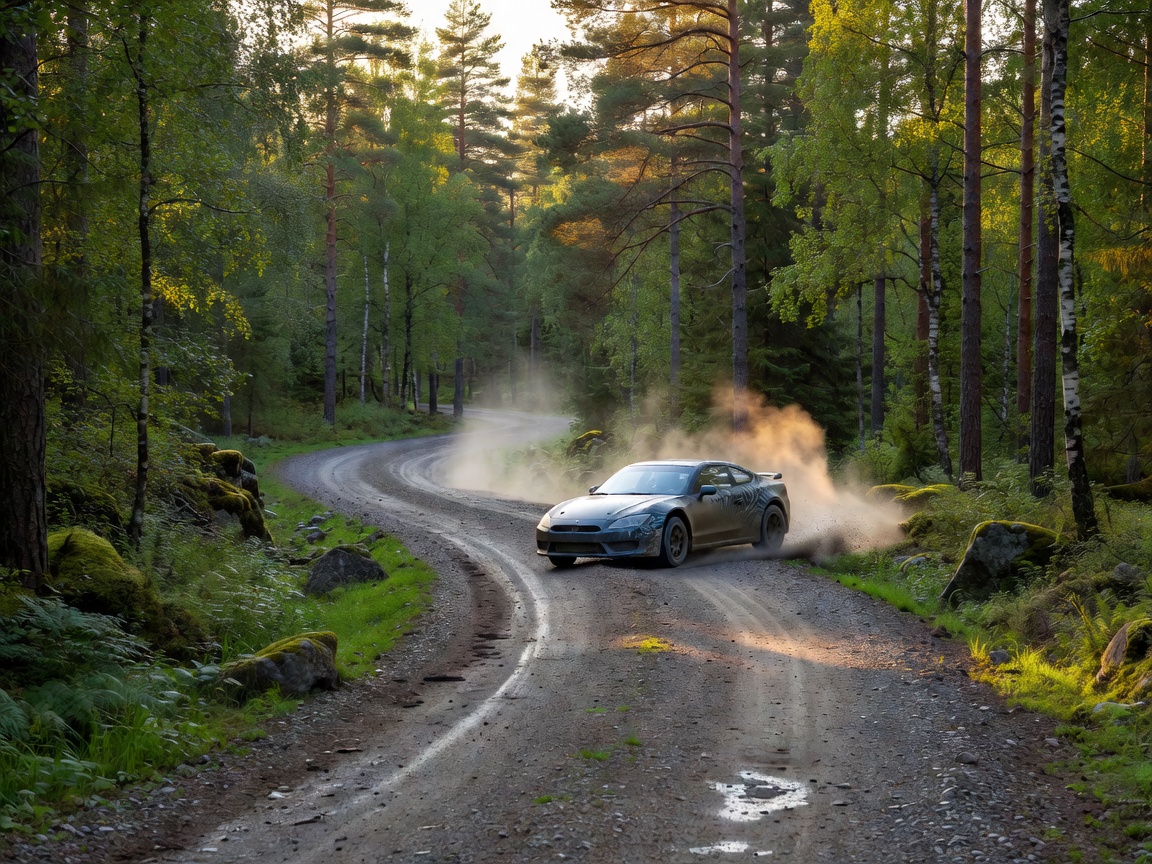
Finland and the fast forest-stage reputation
Rally Finland is a real event in the FIA World Rally Championship calendar across its history. Its Finnish forest-road setting is widely associated with flowing gravel and pronounced elevation changes. The combination of speed, crests and changing sight lines has helped define the event’s identity. The term “crest” describes the top of a rise where the road beyond may not be visible. In competition, crews rely on pace notes and controlled conditions. Public-road visitors should not imitate that approach or infer that a forest road is suitable for high-speed driving.
Stage character is not fixed. Weather, maintenance, event route selection and road use can change the surface. No stage length, current route or access claim is made here. For an event, consult official event information and spectator instructions.
Sweden and winter-stage environments
Rally Sweden is a real international rally event with a long association with winter conditions. Snowbanks, packed snow and ice have shaped the event’s stage identity in periods when suitable winter conditions are present. A snowbank can define the edge of a competition road, but it is not a safety barrier for ordinary road travel. Winter surfaces can vary sharply with temperature, traffic and weather.
Event dates, location, itinerary and spectator access can change. Follow organizer guidance for the specific edition. Never approach a closed road or cross a stage route outside the designated visitor plan. Winter rally competition and winter public-road travel have different safety systems, tires, controls and purposes.
Stage categories and what creates their character
Fast gravel
May feature flowing lines and crests. Sight lines can be limited, while loose material changes grip and visibility.
Technical forest
Can include narrower roads, junctions, surface changes and tighter sequences. Forest cover may reduce light and visibility.
Snow and ice
Relies on controlled event conditions and specialist competition equipment. Public winter roads need conservative travel planning.
Elevation change
Rises, dips and uneven profiles affect sight lines and stage rhythm. A map alone cannot show the full road view.
Surface variation and event heritage
Gravel may include compacted material, loose stones, ruts or patches that change after weather and traffic. Snow-and-ice stages depend on temperature and preparation. A mixed surface asks crews to adapt within a competition framework; it also makes the stage difficult to compare from one running to another. Historical importance should be grounded in identifiable events and documented context, not unverified claims about records, winners or lengths.
Spectator planning
Spectating is a separate activity from driving a route. Use official event publications for ticketing, transport, viewing areas, access times and safety rules. Arrive only by permitted routes. Respect marshals, barriers, private property and emergency access. Do not stand on the road, behind unsafe barriers or in restricted zones. Event controls take precedence over a personal itinerary.
Outside an event, a road linked with rally history may be an ordinary public road, a private road or a closed facility. Verify its present status. Do not rely on old maps, fan forums or historic stage descriptions as proof of current access.
Advantages and limits of a stage-focused visit
A stage-focused trip can connect landscape, event history and local culture. It can also create fragile assumptions: a famous name may refer to a changing route, and the stage may not be open or identifiable outside event time. A broader regional itinerary offers more flexibility. Include museums or official event visitor resources where available, and keep the road trip itself on legal, open roads.
Good for
Rally followers who want to understand why forest, gravel, elevation and winter conditions define Scandinavian stage character, and visitors preparing for a properly organized event.
What to know
Rally Finland and Rally Sweden are real events. This guide does not publish current stage routes, event schedules, records, lengths or access permissions. Verify all current event details with the organizer.
Practical checklist
- Use official event information for the edition you plan to attend.
- Confirm spectator access, transport and viewing rules.
- Keep clear of closed roads, barriers and private property.
- Plan accommodation and travel without assuming stage access.
- Use public roads only when they are legally open.